
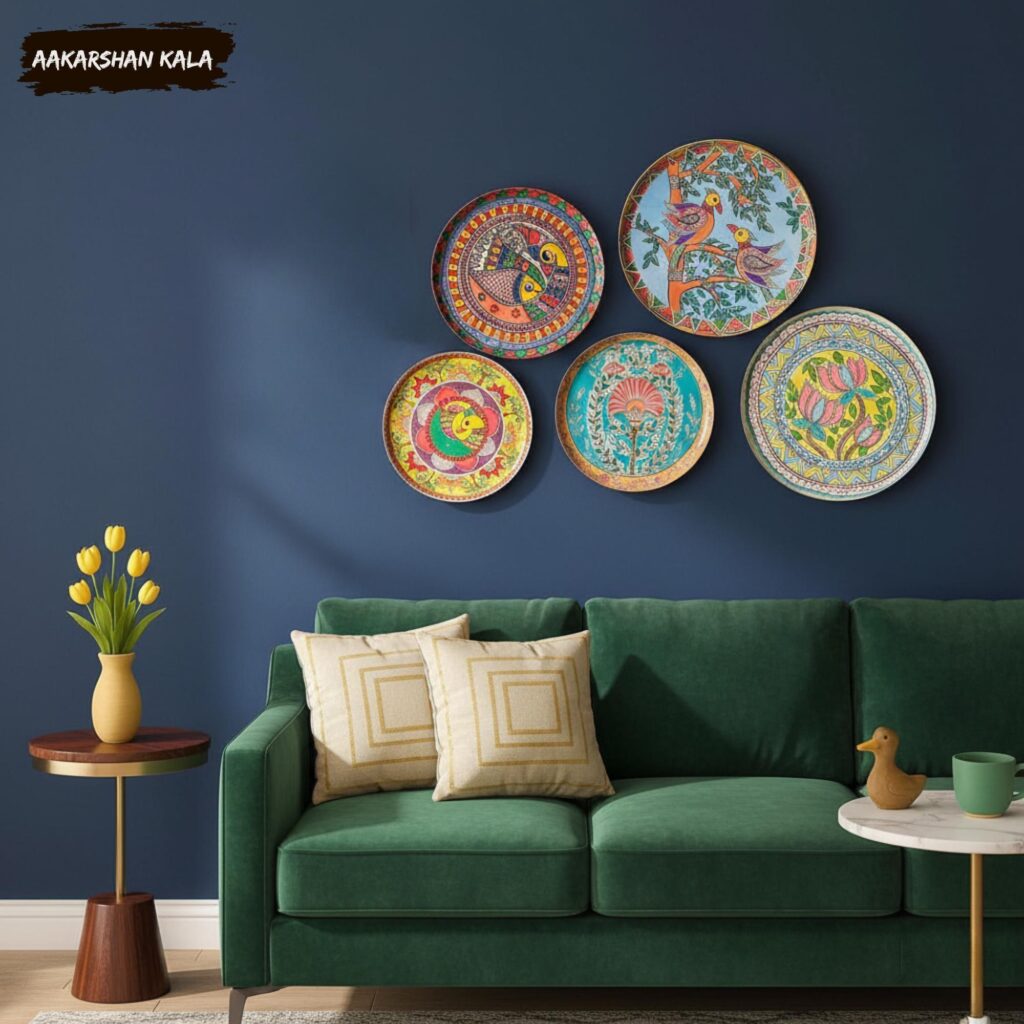
Client: Aakarshan Kala
Website: aakarshankala.com
Industry: Handicrafts, home décor, traditional Indian art, and ecommerce
Focus: Ecommerce website development, product discovery, online shopping experience, brand presentation, and conversion-focused design.
1. Project Overview
How do you bring the beauty of traditional Indian craftsmanship to customers across the world through a digital storefront?
That was the central challenge behind the ecommerce experience for Aakarshan Kala, a brand dedicated to showcasing handcrafted Indian products and traditional artistry. From Jaipur Blue Pottery and decorative wall plates to brass idols, copper creations, and distinctive home accessories, the brand rings together products that combine cultural heritage with contemporary living.
For a business selling visually distinctive, handcrafted products, an ecommerce website needs to accomplish more than displaying a catalog. It must communicate the value of the craftsmanship, help shoppers discover relevant products, present important details clearly, and build enough confidence for customers to purchase online.
At Adpixxels, our approach focused on creating a digital storefront that connects the brand’s artistic identity with a practical shopping experience.
The objective was to organize the product catalog, make browsing more intuitive, strengthen the presentation of the brand’s collections, and create a foundation that could support its international ecommerce ambitions.
The result is a storefront built around product discovery, heritage-led storytelling, and accessible online shopping.
2. Understanding the Brand and Its Challenges
Unlike mass-produced retail products, handcrafted items often carry a story. Their appeal comes from the materials, artistic techniques, cultural influences, and individual details that make each creation distinctive.
Aakarshan Kala’s brand positioning reflects this philosophy, emphasizing traditional craftsmanship, artisan communities, and the relationship between Indian heritage and modern homes.
Translating that identity into an effective online shopping experience required addressing several important considerations.
Presenting a diverse product catalog
The store brings together multiple product categories, including ceramic décor, brass and copper items, sacred idols, wall art, kitchenware, and traditional decorative accessories.
Without a clear information architecture, such a broad catalog can become difficult to navigate. Customers need intuitive ways to find products based on their intended use, material, design, or category.
Communicating craftsmanship digitally
Customers shopping online cannot physically inspect the texture, finish, dimensions, or detailing of a handcrafted product. Product imagery, descriptions, and supporting information therefore become essential to communicating its character and value.
Serving an international audience
The website presents products in US dollars and highlights international shopping, including delivery messaging for customers in the United States.
This requires a storefront that communicates product information clearly and gives international customers confidence in shipping, payment, and customer support.
Balancing aesthetics with usability
An artisan-focused brand needs an attractive visual presentation, but decorative elements should never make shopping unnecessarily complicated.
Our approach was to balance visual storytelling with straightforward navigation, recognizable shopping controls, and a clear path from product discovery to checkout.
3. Building a Storefront Around Product Discovery

The first principle behind the experience was simple: customers should be able to discover products without having to understand the entire catalog.
We focused on organizing the storefront around recognizable product categories and meaningful shopping destinations.
The website’s navigation groups products into collections such as kitchen and dining, Jaipur Blue Pottery, sacred idols, home décor, chess, and hand-painted decorative items.
This structure supports different shopping intentions. A customer looking for a decorative ceramic vase can explore pottery collections, while someone searching for a traditional home-temple item can navigate toward sacred idols.
The homepage also brings together featured products, bestsellers, and new arrivals.
These sections provide multiple entry points into the catalog, helping customers discover products without relying exclusively on the main navigation.
From a conversion perspective, effective product discovery reduces unnecessary searching and creates more opportunities for shoppers to find items that match their interests.
4. Product Presentation That Supports Purchase Decisions
For handcrafted ecommerce, product presentation plays a particularly important role in helping customers understand what they are buying.
A decorative wall plate, a hand-painted ceramic tray, and a brass statue may all appeal to different customers, but each requires clear product information and visual context.
Visual merchandising
We approached product presentation as an essential part of the shopping experience. Product images, names, prices, and promotional information need to work together so visitors can compare products and identify relevant items quickly.
The storefront highlights featured products and bestsellers, with product listings that display pricing and, where applicable, sale prices.
This creates a more scannable browsing experience and helps customers assess available options before opening individual product pages.
Clear product information
For handcrafted items, useful product information should go beyond a product name.
Dimensions, materials, finishes, intended use, care instructions, and details about handmade variations can help customers understand what to expect.
Aakarshan Kala’s authenticity information also explains that handcrafted products may have slight variations in color, pattern, texture, and shape. These differences reflect the nature of handmade craftsmanship rather than necessarily indicating a defect.
Merchandising with purpose
Featured products, new arrivals, and bestsellers serve different purposes within an ecommerce storefront.
- Featured products provide visibility for selected items.
- Bestsellers give shoppers another way to explore popular products.
- New arrivals introduce fresh products and encourage repeat visits.
- Seasonal collections can connect products with relevant occasions and gifting needs.
Together, these merchandising opportunities make the catalog more engaging while giving the business flexibility to adapt its storefront over time.
5. Creating a Stronger Brand Experience Through Storytelling

Aakarshan Kala’s products are connected by a common theme: traditional Indian craftsmanship presented for contemporary homes.
That story is an important part of the brand’s identity.
The website’s messaging emphasizes authentic handmade creations, premium materials, distinctive artistic designs, and support for artisan communities.
We treated this brand narrative as an important complement to the product catalog.
Instead of making the shopping experience entirely transactional, the storefront can help customers understand the artistic and cultural significance behind the products they explore.
For a heritage-focused brand, this distinction matters. Customers may be searching for a particular decorative object, but the story behind its craftsmanship can also influence how they perceive its value.
Brand storytelling is most effective when it supports the shopping journey rather than interrupting it. Concise messaging, relevant imagery, and clearly presented product information allow the brand to communicate its identity while keeping the focus on the products.
6. Building Customer Confidence in International Ecommerce
Trust is essential when customers purchase handcrafted products from an online store, particularly when orders cross international borders.
Shoppers need confidence in the product description, shipping arrangements, payment process, and support available after placing an order.
The Aakarshan Kala website includes customer testimonials, customer service contact information, and dedicated policy pages covering shipping, returns and refunds, payment protection, and product authenticity.
These elements help address common questions that arise before a purchase.
Our broader approach to ecommerce development recognizes that trust is created through the entire customer journey, not just the homepage.
Important considerations include:
- Making product details and dimensions easy to locate.
- Displaying shipping and return policies clearly.
- Providing accessible customer support information.
- Presenting genuine customer reviews in context.
- Keeping cart and checkout interactions understandable.
- Communicating relevant international delivery terms before purchase.
For products with handmade variations, setting clear expectations is especially valuable. Customers should understand both the unique character of an artisan-made item and the practical details of ordering it.
7. Supporting SEO and Long-Term Ecommerce Growth
A well-organized storefront can also provide a foundation for organic search visibility.
Customers searching for handmade Indian home décor may use specific terms relating to product types, materials, traditional art forms, room décor, or gifting occasions.
The site’s category structure creates opportunities to target these searches through relevant collection pages and descriptive product content.
Our recommended SEO priorities for a store like Aakarshan Kala include the following.
Category page optimization: Develop descriptive title tags, meta descriptions, headings, and useful introductory copy for important collections, such as Jaipur Blue Pottery and brass home décor.
Product page optimization: Use unique product descriptions, descriptive image alt text, accurate dimensions, and relevant material details to help customers and search engines understand each product.
Internal linking: Connect related products and categories to make the catalog easier to navigate and establish clearer relationships between pages.
Technical SEO: Monitor indexability, canonical tags, XML sitemaps, structured data, mobile usability, and Core Web Vitals to identify technical barriers to search performance.
Content marketing: Publish helpful articles about traditional Indian crafts, artisan techniques, home styling, decorative ideas, and choosing handcrafted gifts. Relevant content can introduce new audiences to the brand and direct them toward suitable products.
These activities provide opportunities for ongoing organic growth. Actual improvements in rankings, traffic, and revenue would need to be validated using analytics and search performance data.
8. The Outcome: A Foundation for Conversion-Focused Growth
The Aakarshan Kala project demonstrates how an ecommerce storefront can bring product discovery, brand storytelling, and customer confidence together.
The website presents a diverse handcrafted product catalog through organized categories, featured collections, bestsellers, new arrivals, customer testimonials, and supporting brand information.
These elements provide a foundation for helping customers discover products and understand the brand before making a purchase.
However, a conversion-focused website is never a finished product. Its performance depends on how customers actually use it, where they encounter friction, and which improvements generate measurable business value.
The next stage of optimization should focus on tracking product listing engagement, product page views, add-to-cart rates, checkout abandonment, conversion rates, and revenue by acquisition channel.
This data can help identify whether customers are struggling to find products, need additional product information, or encounter unnecessary obstacles during checkout.
Rather than relying on assumptions, continuous testing and measurement can guide future improvements.
9. Conclusion
Creating a digital storefront that converts requires more than an attractive design. It requires a thoughtful understanding of the products, the customers, and the decisions visitors need to make before purchasing.
For Aakarshan Kala, the central focus was creating an ecommerce experience that showcases the richness of Indian craftsmanship while making a diverse product catalog easier to explore.
By bringing together structured navigation, product-focused merchandising, heritage-led storytelling, customer trust elements, and SEO opportunities, the storefront establishes a foundation for continued digital growth.
At Adpixxels, we believe the best ecommerce experiences connect thoughtful design with practical functionality and measurable business objectives.
Our goal is to help businesses transform their online stores into clear, engaging, and scalable digital experiences that make discovering and purchasing products easier.
Looking to build an ecommerce website for your business?
Adpixxels helps brands create ecommerce experiences that combine strong product presentation, intuitive shopping journeys, and a foundation for long-term growth.
Explore our work at Adpixxels or visit Aakarshan Kala to experience the storefront.