
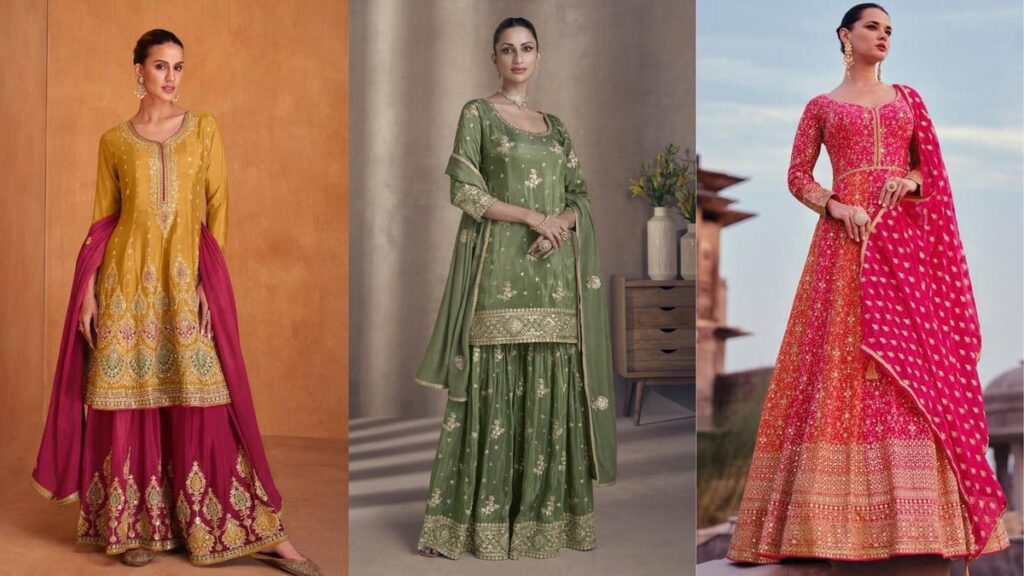
Client: N For Nari
Website: nfornari.uk
Industry: Fashion, ethnic wear, and online retail
Services: Ecommerce website development, online store experience, product categorization, responsive design, and shopping journey optimization.
1. Project Overview
In the competitive world of online fashion retail, a successful ecommerce website needs to do more than display products. It must communicate the brand’s identity, showcase product details effectively, make browsing effortless, and help customers move from discovery to checkout with confidence.
N For Nari is an ethnic fashion brand inspired by Indian heritage and contemporary women’s fashion. Its product range includes Anarkali suits, sharara sets, palazzo suits, sarees, lehengas, cotton kurta sets, and festive collections. The brand brings traditional styles to customers shopping online, with products presented in British pounds on its UK-facing website.
The objective of this project was to build an ecommerce experience that brings the brand’s fashion collections together in a structured, accessible, and visually engaging digital storefront.
At Adpixxels, our approach to ecommerce development centers on the relationship between design, usability, product discovery, and business goals. For N For Nari, this meant creating an online shopping environment where customers could explore diverse collections, compare styles, discover suitable outfits, and shop through a clear and organized interface.
The project focused on establishing a strong digital foundation for the brand while supporting the needs of modern online fashion shoppers.
2. Understanding the Business and Its Challenges
Fashion ecommerce presents unique challenges. Unlike physical retail, customers cannot touch a fabric, examine embroidery in person, or try on an outfit before purchasing. The website must bridge this gap through clear product presentation and a smooth shopping experience.
For a brand like N For Nari, the challenge extends beyond showcasing individual products. The store offers multiple outfit categories, styles, fabric types, festive collections, and extended sizes. Without an intuitive structure, customers may struggle to find the products most relevant to their needs.
Our development strategy addressed four key priorities.
Creating a cohesive brand experience
The website needed to communicate the brand’s connection to Indian ethnic fashion while maintaining the convenience expected from a modern ecommerce store. Product imagery, collection layouts, typography, and page structure all contribute to how shoppers perceive a fashion brand online.
Simplifying product discovery
Customers shopping for festive outfits may browse differently from those looking for everyday cotton suits or wedding attire. The store needed clear category navigation and meaningful collection groupings to support different shopping intentions.
Supporting product-level decision-making
Product names, pricing, images, size options, and descriptions play important roles in online purchase decisions. Organizing these elements clearly helps customers evaluate products before adding them to their carts.
Building a scalable storefront
An ecommerce website should accommodate new products, seasonal campaigns, changing collections, and promotional offers without requiring a complete redesign every time the business evolves.
These priorities shaped our approach to the website’s structure and shopping journey.
3. Our Strategy: Design Around the Customer Journey
Rather than treating the website as a collection of separate pages, we approached it as a connected customer journey.
A shopper might arrive through a search engine, discover a product through social media, browse a festive collection, or return directly to the store. Regardless of the entry point, the experience should make the next step obvious.
Our strategy focused on three stages:
- Discovery: Help shoppers understand the available collections and identify relevant styles.
- Evaluation: Present product information, pricing, images, and available options in an organized format.
- Purchase: Make the transition from product selection to cart and checkout as straightforward as possible.
This journey-based approach informed the information architecture, product presentation, navigation, and ecommerce functionality.
The goal was to reduce unnecessary friction and give shoppers a consistent experience across the store.
4. Ecommerce Website Development and Implementation
A. Structured product categories and navigation
A large fashion catalog needs a clear organizational system. We focused on making key product categories easy to identify and browse.
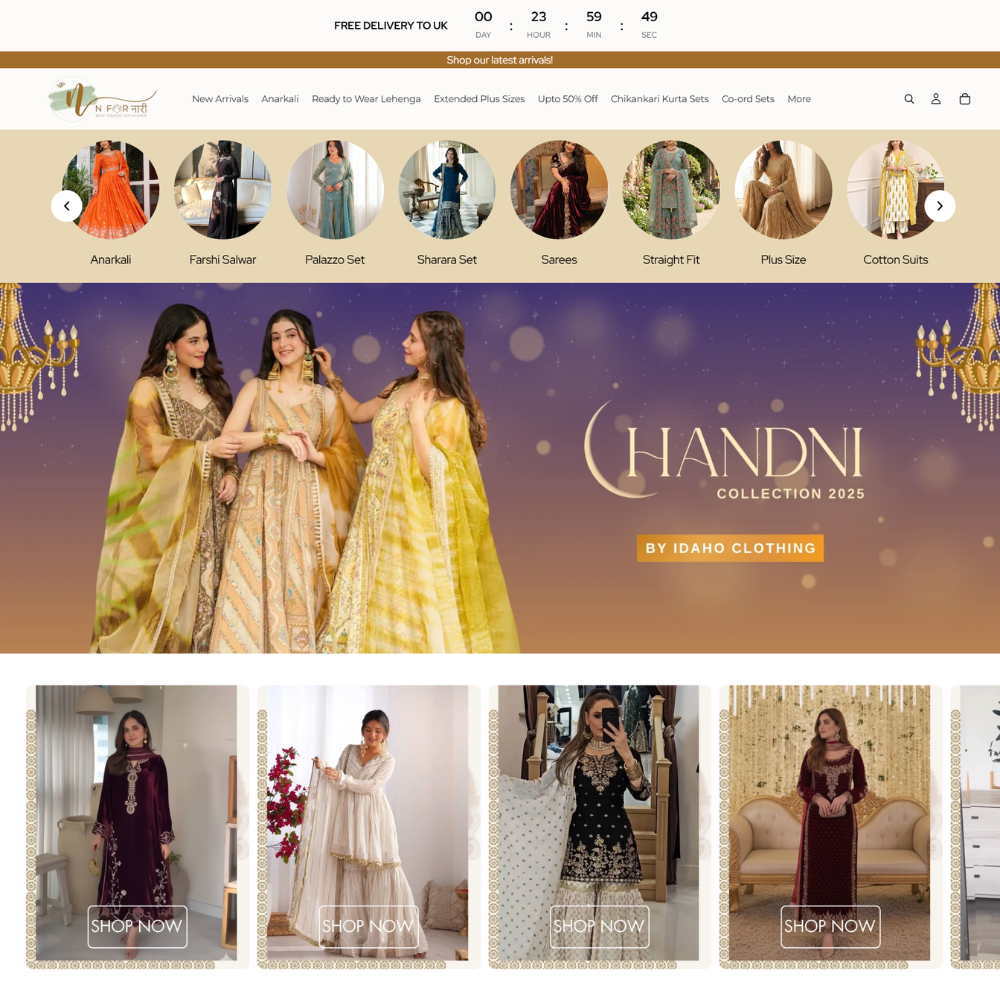
The N For Nari storefront features categories including Anarkali, farshi salwar, palazzo sets, sharara sets, sarees, straight-fit styles, plus-size clothing, and cotton suits. It also highlights festive and occasion-specific collections.
This structure supports different shopping behaviors. A customer looking for a wedding outfit can explore occasionwear, while someone searching for everyday clothing can navigate toward cotton suits and other relevant styles.
Clear categorization also creates a useful foundation for internal linking and search engine discoverability. When categories are organized logically and supported by descriptive content, both shoppers and search engines can better understand the relationship between products and collections.
B. Product presentation designed for fashion ecommerce
In fashion retail, visual presentation is a central part of the buying experience.
Customers want to understand an outfit’s design, color, embroidery, silhouette, and overall appearance before making a purchase. Product listings therefore need to balance visual appeal with practical information.
We focused on a product-browsing experience that brings important information into view, including product names, images, prices, and relevant shopping options.
The live store displays coordinated ethnic outfits across different price points, with product listings and promotional pricing helping shoppers compare available options.
A well-organized product grid makes it easier to scan the catalog without opening every product individually. Consistent presentation also helps maintain a more cohesive shopping experience as the product inventory grows.
C. Collection-led shopping experience
Fashion purchases are often driven by occasions, seasons, and personal style rather than product type alone.
To accommodate these behaviors, the store includes collection-based discovery alongside its core product categories. Festive edits, wedding collections, seasonal ranges, and style-led groupings provide additional ways for customers to explore the catalog.
This approach supports merchandising flexibility. Collections can help the brand bring relevant products together for particular shopping moments, highlight new arrivals, and direct attention toward selected ranges.
From a user experience perspective, collection-led navigation also reduces the need for shoppers to understand the entire product catalog before finding something relevant.
D. Responsive shopping experience
Customers may discover fashion products through mobile social feeds, search results, or direct links shared by friends. An ecommerce experience must therefore remain usable across different screen sizes.
Responsive design involves more than shrinking a desktop layout. Navigation, product grids, images, buttons, and forms must remain practical on smaller screens.
For N For Nari, the broader implementation strategy emphasized a consistent shopping journey across devices, with product discovery and purchasing functionality forming the core of the experience.
A mobile-friendly storefront can help reduce usability barriers for shoppers browsing on smartphones, although the actual impact on conversion rates must be established through analytics rather than assumed.
E. Supporting the purchase journey
A customer-friendly storefront should make it easy to move from browsing to buying.
Important elements include understandable product options, visible pricing, cart functionality, and a clear route to checkout. For clothing stores, size availability and accurate product information are especially important because they influence purchase confidence.
We treated the shopping journey as an essential part of the development process rather than an afterthought. The objective was to connect product discovery with practical purchasing steps while keeping the interface straightforward.
5. SEO-Friendly Ecommerce Architecture
Organic search can be an important acquisition channel for fashion brands, particularly when customers search for specific clothing categories, styles, fabrics, and occasions.
For N For Nari, the existing category structure provides a foundation for developing a broader ecommerce SEO strategy.
Our recommended SEO priorities for a store of this kind include:
Category-level optimization: Create descriptive page titles, meta descriptions, headings, and introductory copy that reflect the products and shopping intent associated with each collection.
Product page optimization: Use unique product descriptions, descriptive image alt text, clear product naming, and relevant product information rather than relying entirely on repetitive catalog text.
Internal linking: Connect related products, collections, and useful fashion guides to help visitors discover more relevant content and search engines understand the site’s structure.
Technical SEO: Monitor indexability, canonical URLs, XML sitemaps, mobile usability, structured data, and Core Web Vitals. These checks help identify technical barriers that may affect search visibility or user experience.
Content marketing: Develop helpful content around outfit styling, festive fashion, wedding guest attire, fabric selection, and ethnic wear trends. Content should answer real customer questions and link naturally to relevant products.
These are strategic opportunities, not a claim that specific ranking improvements have already been achieved. Validating organic growth requires access to search performance data, indexing reports, and analytics.
6. Building Trust Through Product Information and Social Proof
Online fashion purchases involve uncertainty. Customers want confidence that the products will meet their expectations and that support will be available if they need assistance.
The N For Nari storefront includes a customer review section featuring feedback about product appearance, fit, and delivery experience. It also provides customer service contact details and links to important store information.
These elements contribute to a more complete ecommerce experience.
From a development and optimization perspective, trust can be strengthened through:
- Clear product descriptions and accurate images.
- Accessible sizing and availability information.
- Transparent shipping, returns, and refund policies.
- Visible customer support options.
- Genuine customer reviews presented in a readable format.
- A consistent and understandable checkout experience.
Trust is not created by visual design alone. The website experience, the information provided, and the actual fulfillment and support process must work together.
7. The Outcome: A Foundation for Ecommerce Growth
The project demonstrates how thoughtful ecommerce development can bring product organization, brand presentation, and customer usability together in a single online storefront.
The current N For Nari website presents a broad ethnic fashion catalog, structured product categories, collection-based discovery, promotional pricing, and customer feedback.
These elements create a foundation that can support ongoing merchandising, customer acquisition, and future optimization.
The most meaningful next step is to measure how visitors interact with that experience. Useful indicators include:
- Organic search impressions and clicks.
- Product listing click-through rates.
- Product page engagement.
- Add-to-cart rate.
- Checkout completion rate.
- Conversion rate by device and acquisition channel.
- Revenue per visitor and average order value.
Comparing these metrics before and after specific improvements would help establish which changes deliver measurable business value.
We do not assign percentage increases in sales, traffic, or conversions to this project without verified performance data. Instead, the focus is on the ecommerce foundations and opportunities that can be tested and improved over time.
8. Conclusion
Building a successful fashion ecommerce website requires a balance between visual storytelling, intuitive navigation, detailed product presentation, and a reliable purchasing journey.
For N For Nari, the development approach centered on making Indian ethnic fashion easier to discover online while creating a structured storefront that accommodates multiple product categories, styles, and shopping occasions.
The broader lesson is that ecommerce performance is not determined by design alone. It depends on how effectively the website connects the right products with the right customers, communicates useful information, builds trust, and removes friction from the purchase process.
At Adpixxels, we believe that high-performance ecommerce experiences are built through a combination of thoughtful development, user-focused design, search-friendly architecture, and continuous optimization.
Have an ecommerce project in mind?
We help businesses build and improve ecommerce websites designed to showcase their products, strengthen their online presence, and create better shopping experiences.
Explore our work at Adpixxels or visit N For Nari to see the storefront.